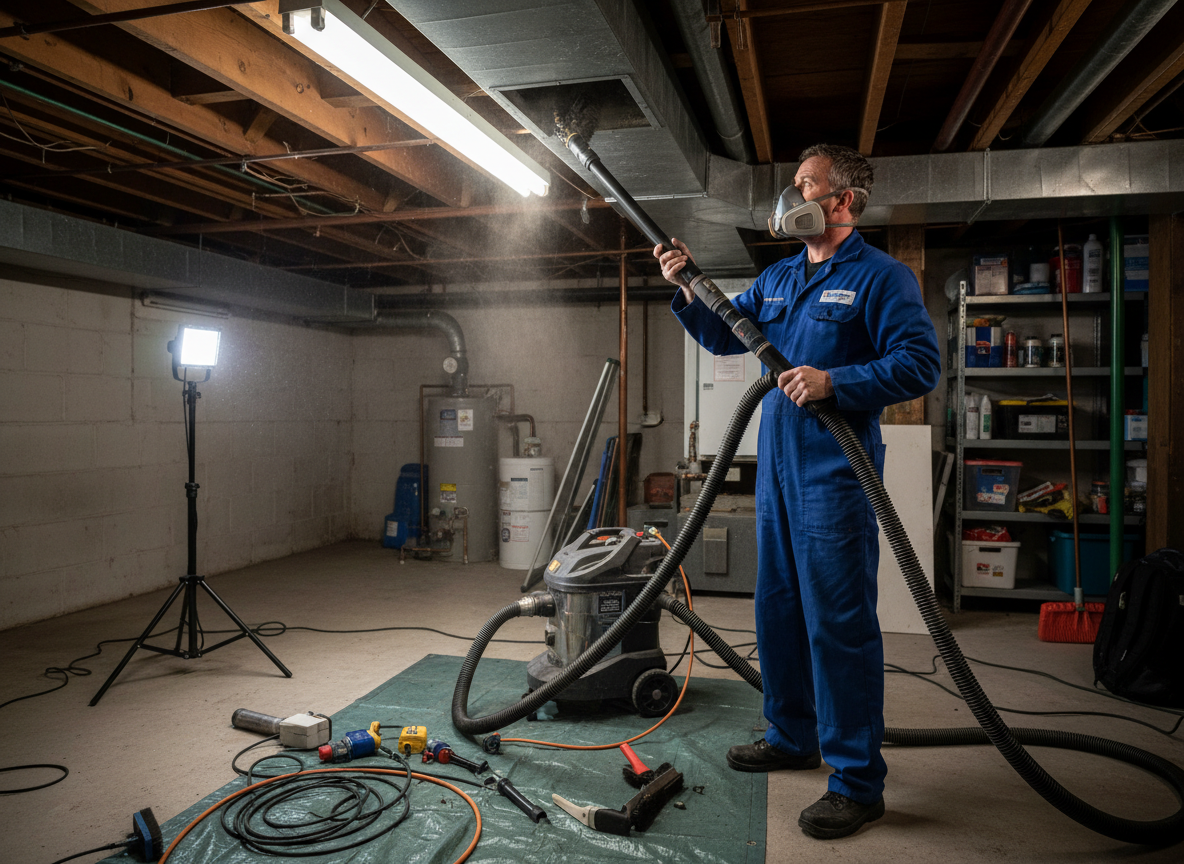
Gloucester City homes built from the 1940s through the 1970s often have original sheet-metal ducts running through crawl spaces and basements close to the Delaware River. Seasonal humidity spikes in summer allow dust and pollen to stick to duct walls, while winter heating cycles push that material into living areas. Cleaning these systems requires reaching branch lines that turn sharply at floor joists, a detail that shows up repeatedly in row homes along Johnson Boulevard and nearby streets.
River proximity also means higher moisture levels that can support light mold growth inside ducts when insulation is missing or damaged. Technicians working in Gloucester County routinely check for gaps at register boots where outside air leaks in, especially in homes near the waterfront. Removing buildup without disturbing fragile older insulation or disturbing settled dust in return plenums takes steady technique and proper containment.
Fall pollen from trees along the river corridor and winter road salt dust tracked indoors both increase the load on filtration. In these conditions a full cleaning includes the main trunk, all supply and return runs, and the furnace blower compartment. Homeowners in Gloucester notice fewer allergy symptoms once the system is cleared, particularly in neighborhoods where windows stay closed for much of the year.
Technician insight
In Gloucester, the thing that catches most people out with local air duct cleaning is how the older brick row homes along the river trap moisture in low basements; that humidity makes dust cake onto duct walls far faster than in drier inland neighborhoods, so a standard vacuum pass often leaves residue behind unless the tech spends extra time on the bottom trunk lines.
Row Home Near Johnson Boulevard
A Gloucester City homeowner called after noticing heavy dust on furniture despite frequent vacuuming. Inspection showed thick buildup in the return lines running under the first floor. We set up containment, agitated and extracted the material, then cleared the blower housing. Airflow improved and the family reported less morning congestion within a week.
How it works
- 1
Initial Inspection
Technician examines duct layout, access points, and visible debris through registers in Gloucester homes.
- 2
Negative Air Setup
Equipment creates containment to prevent dust from escaping into living spaces during cleaning.
- 3
Agitation and Extraction
Rotating brushes and compressed air loosen material while the vacuum removes it from the trunk lines.
- 4
Final Check and Reassembly
Registers are reinstalled, filters checked, and airflow verified before leaving the property.
Pricing
Cost depends on number of runs, access difficulty, and whether the home has a basement or crawl space.