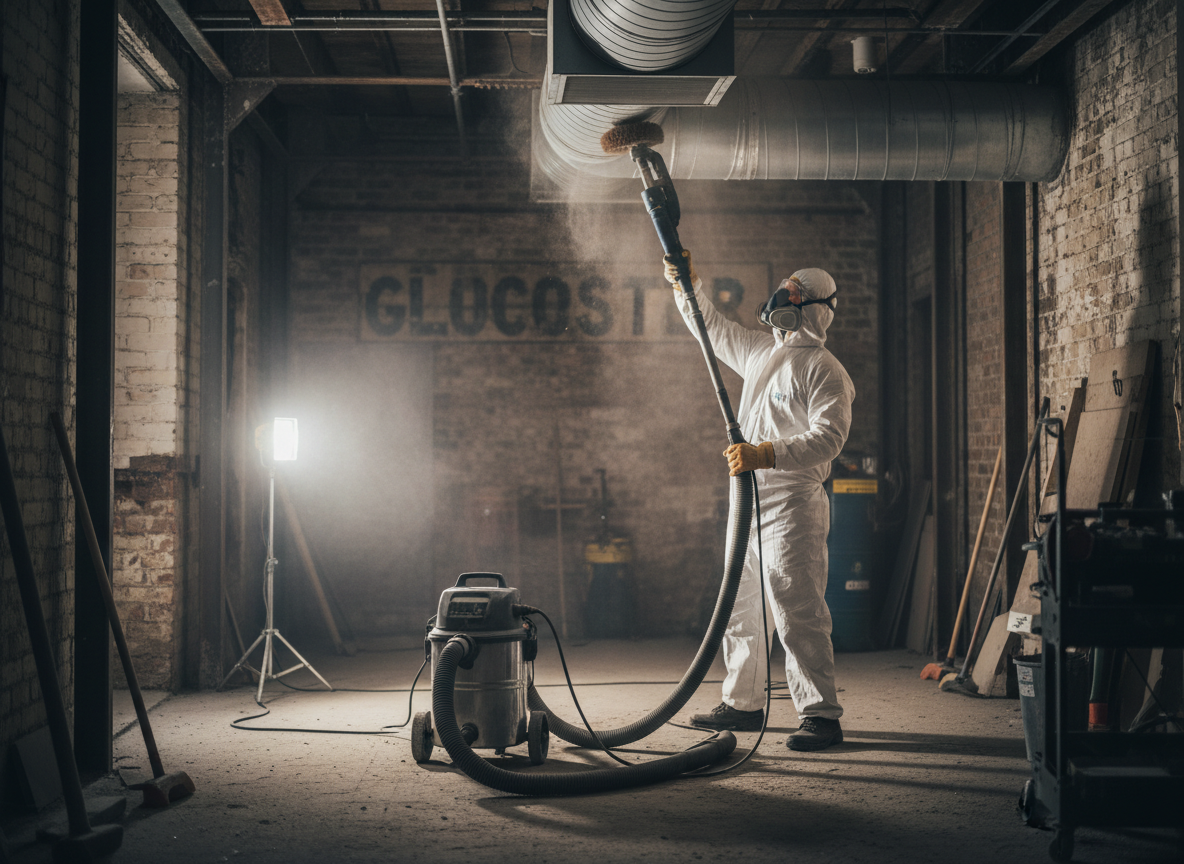
Gloucester City homes built before 1960 often have narrow sheet-metal ducts that run through unconditioned crawl spaces and basements. When a sudden odor or restricted airflow appears, these older runs trap moisture from the Delaware River humidity and allow dust to cake on the seams. Emergency calls here usually start with a visual inspection using a lighted camera because the tight 90-degree elbows common in row homes make full access difficult without cutting access panels.
Heavy spring pollen and summer humidity in Gloucester County push residents to run HVAC systems longer, which loads the return ducts with fine particles that standard filters miss. When a system suddenly blows visible dust, the issue is rarely just the filter. Technicians trace the problem to the main trunk line where years of settled debris breaks loose after a power surge or fan-motor replacement. Clearing only the visible sections leaves the branch lines untouched and the complaint returns within days.
Flooding along the Newton Creek corridor or after a nor’easter can push water into basement ductwork. In these cases the priority is removing standing water and wet insulation before mold colonies form on the interior walls of the ducts. Delaying the job even 48 hours allows spores to travel through the supply runs into living spaces, especially in the tight floor plans of Gloucester City row homes where bedrooms sit directly above the basement trunks.
Technician insight
In Gloucester, the thing that catches most people out with Emergency Air Duct Cleaning is how the older brick row homes along the river hold moisture in the basement trunks. One heavy rain and the ducts stay damp for days, so what looks like a simple dust complaint is often already growing mold on the bottom seams.
Sudden Dust After Fan Replacement
A Gloucester City homeowner replaced the blower motor and immediately saw gray dust on every surface. Camera inspection showed decades of debris packed at the first elbow where the old motor vibration had finally loosened it. We isolated the trunk, extracted the material through two new access points, and verified clean runs before restoring airflow.
How it works
- 1
24/7 Dispatch
Answer the call at any hour and confirm the address in Gloucester City or surrounding neighborhoods before rolling a truck.
- 2
On-Site Assessment
Walk the system with a camera to locate the blockage or moisture source without removing registers first.
- 3
Containment and Cleaning
Set up negative-air machines at the main trunk, then agitate and extract debris from each accessible branch.
- 4
Post-Job Verification
Run the system and re-inspect with the camera so the homeowner can see the difference before leaving the property.
Pricing
Emergency rates reflect after-hours response and the need to work around occupied homes; final cost depends on duct layout and how many access points are required.