Gloucester City homes built in the mid-20th century often have rigid metal ductwork routed through crawl spaces and knee-wall attics that trap construction dust, insulation fibers, and pet dander. Seasonal heating and cooling cycles pull in outside air loaded with Delaware River humidity, allowing fine particles to settle along long horizontal runs that standard household filters never reach. Neglected ducts reduce airflow and recirculate allergens every time the system cycles.
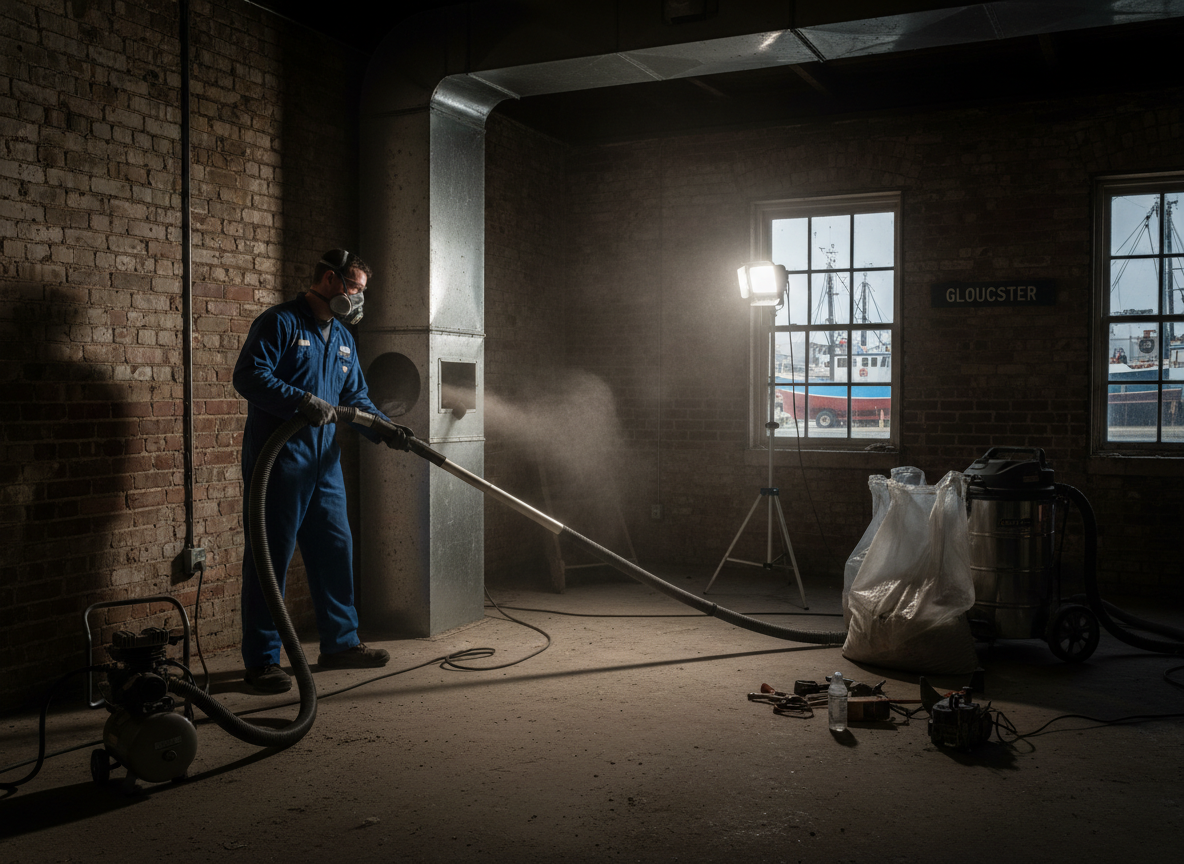
Technicians begin with a camera inspection to map access points and identify collapsed flex sections common in Gloucester’s split-level layouts. Negative-pressure equipment is connected at the main trunk while brushes and compressed air dislodge debris without damaging original duct seams. Final passes include a light antimicrobial treatment only where moisture staining is visible, avoiding unnecessary chemical use in dry systems.
Homeowners frequently attempt DIY register cleaning and miss the main trunk lines that run under first-floor subfloors. That leaves the bulk of the load untouched and can push loosened material deeper into the system. Professional equipment reaches these lines while protecting registers and finished surfaces from blowback.
After service, airflow is rechecked at each supply to confirm static pressure has returned to normal ranges for the home’s furnace size. Gloucester residents notice quieter operation and fewer dust deposits on furniture within days, especially during the first cold snap when the furnace runs continuously.
Technician insight
In Gloucester, the thing that catches most people out with HVAC duct cleaning is the older row homes near Johnson Boulevard where ducts run through low, damp crawl spaces that collect river humidity and make the job slower and messier than newer construction.
Blocked Return in Gloucester City Split-Level
Homeowner reported weak airflow on the second floor during winter. Inspection showed a collapsed flex run under the first-floor subfloor filled with construction debris and insulation. Crew replaced the damaged section, cleared the main trunk, and restored full airflow to all registers.
How it works
- 1
Initial Camera Inspection
Technicians map every accessible trunk and branch line from the Gloucester City address outward, noting any crushed flex, disconnected joints, or heavy debris loads typical of older neighborhood ductwork.
- 2
Negative-Pressure Setup
Equipment is staged at the main return and supply plenums to create containment before agitation begins, preventing dust migration into living spaces common in compact Gloucester lots.
- 3
Mechanical Agitation and Extraction
Rotating brushes and directed air move debris along the duct walls to the vacuum collection point, clearing the long horizontal runs found under first floors in local split-level homes.
- 4
Post-Clean Airflow Verification
Each supply register is tested to confirm restored airflow and that no residual material remains in the system before the crew leaves the property.
Pricing
Cost depends on number of trunk lines, access difficulty in crawl spaces, and whether flex sections need replacement; upfront quote provided after inspection.