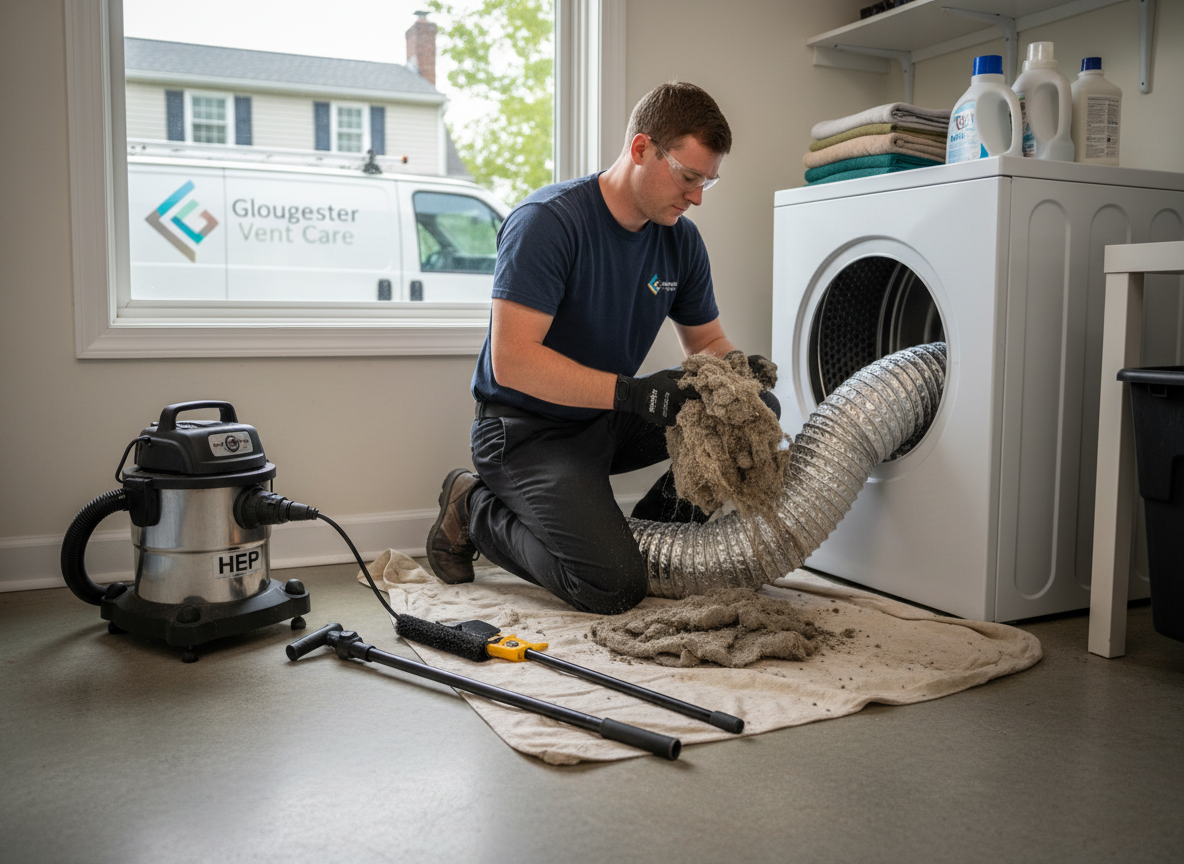
Gloucester City homes built before 1960 often feature long horizontal dryer vent runs through basements or crawl spaces that trap lint quickly in the area's humid summers and cold winters. These runs require full disassembly because standard brushes cannot reach bends where moisture from the Delaware River adds weight to the lint. Skipping this step leaves hidden blockages that force the dryer to run longer and raise exhaust temperatures.
NFPA 211 guidelines call for annual cleaning when the vent travels more than 25 feet or includes multiple elbows, conditions common in Gloucester row homes and split-levels near Johnson Boulevard. We use rotary brushes sized for 4-inch rigid metal duct, not flexible foil that tears during cleaning. After clearing the line we reattach with proper clamps and check the exterior hood flap for proper operation so wind-driven rain does not enter the system.
Homeowners sometimes attempt cleaning with leaf blowers or shop vacs, which only pushes lint farther into wall cavities or the roof vent. In Gloucester's older stock this often creates secondary clogs behind plaster or drywall that require wall access. Professional equipment reaches the full length without demolition and confirms clearance with a camera inspection before leaving the job.
Technician insight
In Gloucester the thing that catches most people out with dryer vent cleaning is the long horizontal runs through damp basements in pre-1960 homes near the river; moisture makes lint stick to the pipe walls so a standard vacuum from the dryer end never reaches it.
Clogged vent in Gloucester City row home
A homeowner on Bergen Street noticed the dryer taking two cycles to finish clothes. We found a 35-foot run with three elbows packed with damp lint. After full rotary cleaning and camera confirmation the airflow returned to normal and the dryer finished loads on the first cycle.
How it works
- 1
Initial Inspection
We examine the dryer, vent connection, and exterior termination point to map the full run length and note any visible damage or improper materials.
- 2
Disconnect and Access
The dryer is pulled away and the vent is detached at both ends so the entire line can be cleaned without obstruction.
- 3
Rotary Cleaning
A powered rotary brush sized for 4-inch duct removes compacted lint while a vacuum captures debris at the exterior outlet.
- 4
Reassembly and Test
We reinstall the vent with proper clamps, verify the exterior hood operates freely, and run the dryer to confirm restored airflow.
Pricing
Pricing varies by vent length, number of elbows, and access difficulty; we provide an upfront quote after inspection.